
Can I fit CCTV cameras myself?
Part 1: What you can sensibly do yourself
Yes, you can install CCTV cameras yourself these days but there are some easy to avoid mistakes and we can help you to avoid them.

Kris Simons
Sales Director, ATEC
“Self-install is realistic, but for most organisations the useful question is not whether to do it yourself. It is which parts of the job you keep in-house and which you hand over. The hybrid split we now use on the majority of projects: the customer provides cabling and containment to an agreed design, and termination, camera installation and commissioning are done by a specialist.”
In this article
Share on:
Yes, you can install CCTV cameras yourself these days
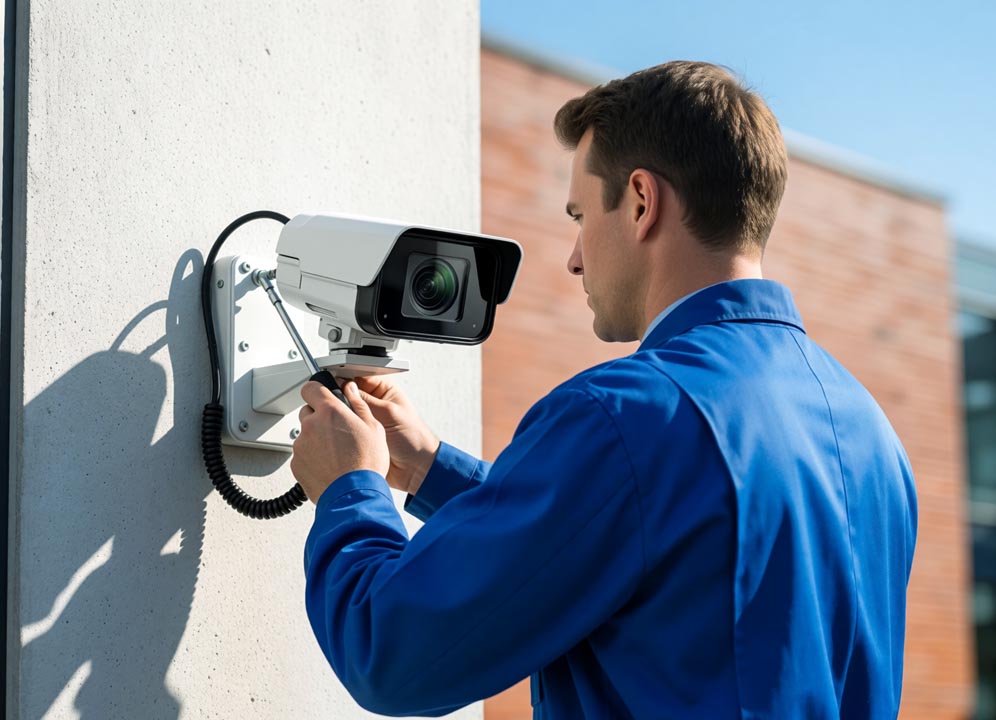
Cameras have become more user-friendly and plenty of online guides walk you through the process for popular brands. For a simple setup with a couple of cameras, many people manage it without major issues and save on labour costs. For most organisations, though, the useful question is not whether to install it yourself or bring someone in. It is which parts of the job you take on, and which parts you hand over.
For medium to large organisations with multiple sites or more complex requirements, the question gets more complicated. We work with customers who need reliable systems that integrate multiple security systems, sometimes into one single front-end, over multiple sites.
Full self-install can work on small, self-contained jobs. It tends to come unstuck where cable routes are long, where the system has to work alongside access control, intruder detection or a PSIM front end, or where the footage may end up being relied on as evidence. Below is a plain look at what most organisations can sensibly do in-house, what is better left to a specialist, and the split we now use on the majority of projects.
The split that works best in practice
The approach we see most often now, and the one we generally prefer, is a hybrid one. The customer arranges the network cabling and containment to an agreed design. We then install and terminate the cameras to the manufacturer’s recommendations and commission them onto the video management system.
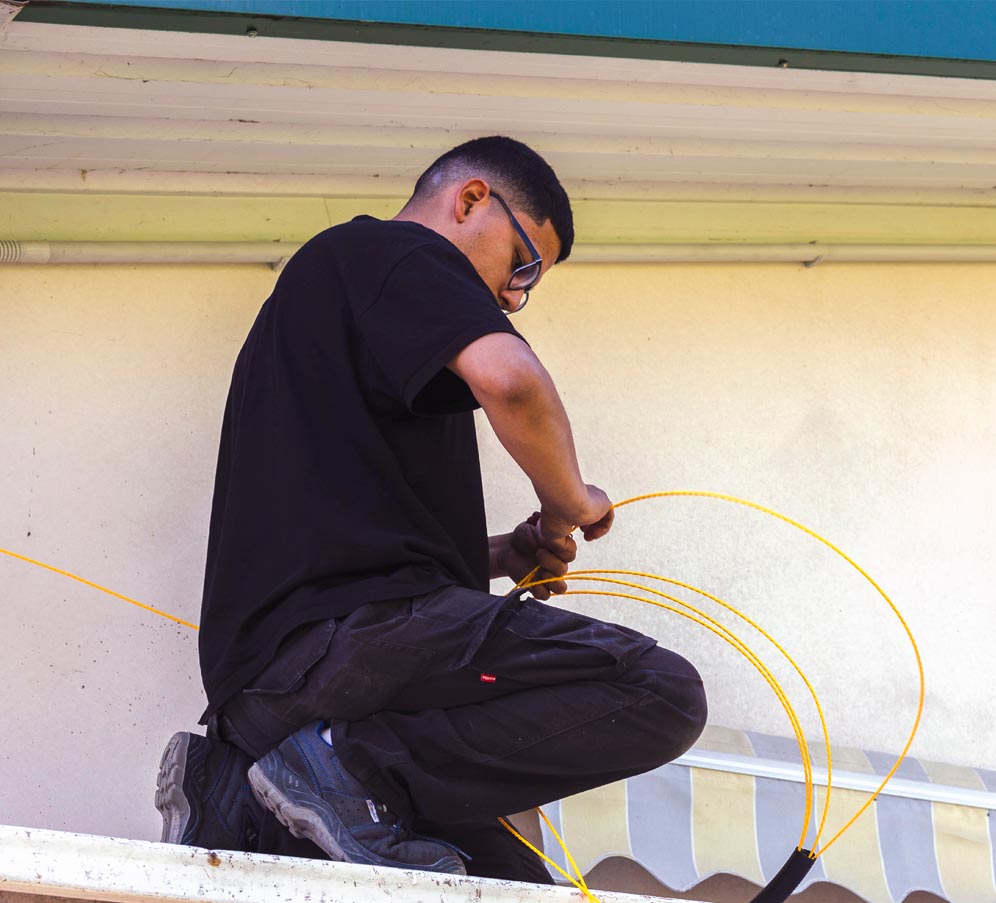
It works because the two halves of the job need different things. Pulling cable is labour, access and knowledge of the building. Your own staff, or the electrical contractor you already use, know which ceiling voids are accessible, where the risers are and which route avoids closing a corridor for a day. That local knowledge can make the cabling cheaper and quicker to do in-house than we could do it. Terminating that cable, mounting the camera correctly and commissioning it is specialist work, where small errors are expensive and often invisible until the moment you need the recording.
If you take this route, agree the cable specification, the containment and the camera positions in writing before anyone starts pulling cable. Moving a badly placed run after the ceilings are closed costs far more than getting the design right at the start.
Why more people are considering DIY CCTV installation
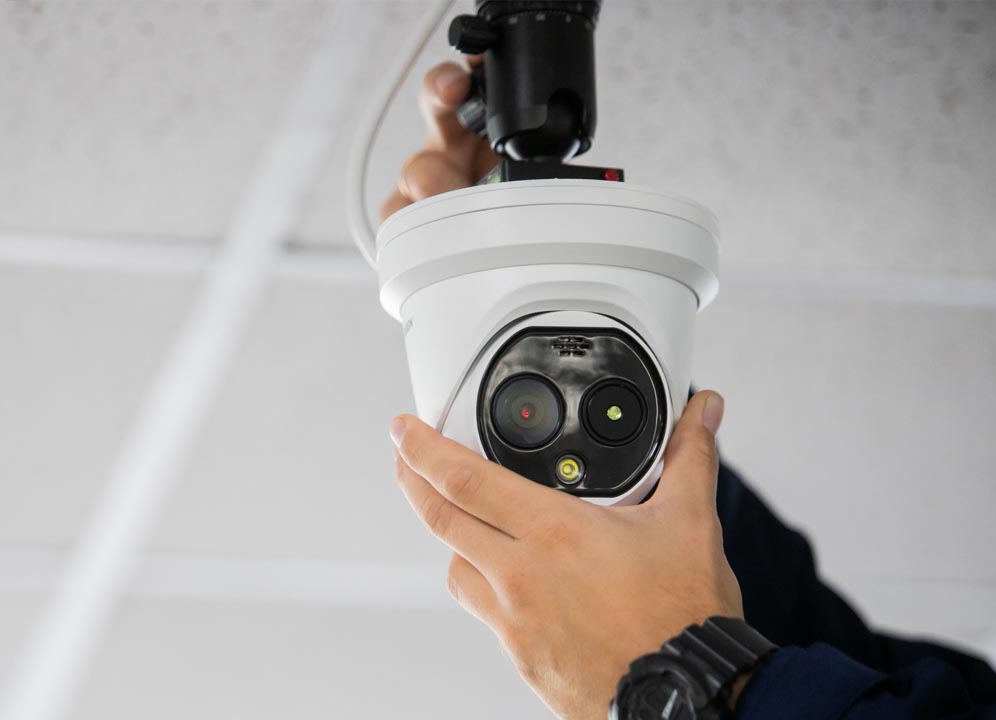
Modern security cameras, especially Power over Ethernet (PoE) models, are easier to set up than they used to be. You can buy kits online, mount cameras with basic tools, run some cable if needed, and configure the system through an app or simple software. Many manufacturers now provide sufficient instructions, and remote support or cloud management means you might not need an engineer on site for every addition.
Cost is the obvious driver. Labour, especially with travel for multi-site jobs, adds up quickly. On a dispersed estate, travel and engineer time can account for a large share of the cost of a small addition, which is why adding two cameras to an outbuilding can look disproportionately expensive on paper. For smaller expansions or low-risk areas, this appeals to many facility managers trying to control budgets.
Programme control matters too. You are not waiting on a contractor’s diary, and you can test positions, make adjustments and expand gradually.
What about buying the cameras yourself?
The same logic gets applied to the hardware. The cameras are on a website, the price looks better than the one in the quote, so why not buy them direct? Increasingly, clients do.
Sometimes that is perfectly sensible. On a single site running one manufacturer’s equipment, buying a like-for-like replacement camera is straightforward. On a larger estate, a few things tend to catch people out.
Compatibility is rarely all or nothing. Most cameras will connect to most VMS platforms over ONVIF and most will give you a picture. What tends to be lost is the manufacturer-specific integration: analytics metadata, edge storage, audio, PTZ presets and firmware management from within the VMS. You may also need a licence per channel on the VMS, which is a cost separate from the camera itself.
There is a product security angle as well. Since April 2024 the Product Security and Telecommunications Infrastructure regime has required connectable products sold to UK consumers to meet a baseline: no universal default passwords, a published contact for reporting vulnerabilities, and a stated minimum period for security updates. Much professional CCTV equipment sits outside that regime, which cuts both ways. The baseline does not automatically apply, so who is maintaining the firmware, and for how long, is a question worth asking your supplier before you buy.
Then there is standardisation. Across several sites, a mixed fleet of cameras means mixed firmware, mixed configuration, mixed spares and mixed failure modes. The saving on a handful of units is usually smaller than the cost of maintaining the variety.

Running your own cables: Getting the specification right
Cable type and quality.
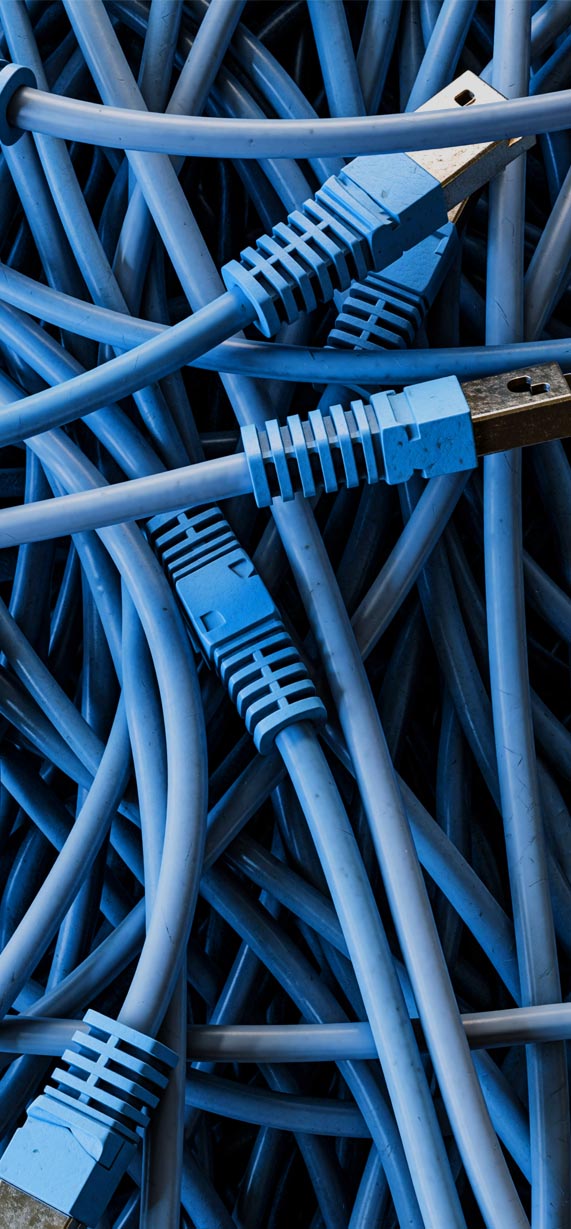
For modern IP/PoE cameras, you need solid copper Cat5e as a minimum, and preferably Cat6 or Cat6A on anything new. Cat6e is worth a word of warning: it is not a recognised standard, however widely it is advertised. The standardised grades are Cat5e, Cat6, Cat6A and above, and what a supplier means by “Cat6e” varies from one brand to the next. If you want headroom, specify Cat6A. Cheap CCA (copper-clad aluminium) cable is the main false economy. Its higher resistance means greater voltage drop and more heat under PoE load, it fails more often at terminations, and it does not meet BS EN 50173 or BS 6701. Cable run inside a building also needs a declared reaction-to-fire (Euroclass) rating under the Construction Products Regulation, which CCA sold cheaply online frequently does not carry.
Check the power budget as well as the data. IEEE 802.3af gives roughly 15W at the port, 802.3at around 30W and 802.3bt up to 60W or 90W. A fixed camera with an infrared illuminator will usually run happily on 802.3af or 802.3at. A PTZ with a heater and a washer will not, and neither will a long run at the bottom end of the budget.
The 100 metre figure for Ethernet is the limit, not a target. It covers the whole channel: 90 metres of fixed cable plus up to 10 metres of patch leads at either end. Past that, the answer is a local switch, a PoE extender or fibre with a media converter. A camera that powers up on the bench but not on the wall is the classic symptom of an over-length or badly terminated run. Data cable also has to be kept clear of mains cabling. That is partly about interference and dropouts, but mainly about safety and compliance: BS 7671 requires segregation between mains and data circuits and BS 6701 sets out separation distances. Crossing at right angles is fine. Sharing containment with an unsegregated mains circuit is not.
Joints are the other weak point. A coupler in the middle of a run, or a joint made in an RJ45 patch, is a fault waiting to happen. Runs should be continuous from patch panel to camera, and terminated once, properly, at each end.
Environmental considerations
Outdoor cable runs need proper protection. Use UV-resistant, outdoor-rated cable, often with a gel-filled sheath. Anything going underground should be in duct with a draw rope rather than buried directly. A duct lets you replace a damaged cable. All outdoor junctions and camera connections must be weatherproofed. Poor sealing is a common cause of water ingress that kills cameras or recorders later.
Consider temperature extremes, condensation inside enclosures, and dust. Cameras and cable entry points need suitable IP ratings, typically IP65 or higher for exposed outdoor use and IP66 or IP67 in harsher positions. Those two are not simply a ladder: IP66 is tested against powerful water jets and IP67 against temporary immersion, so match the rating to the actual exposure. For anything within reach from ground level, the impact rating matters as much as the IP rating, IK08 for general use, IK10 where vandalism is a realistic prospect.
Compliance requirements
A CCTV system in an organisational setting that captures images of identifiable people is processing personal data under UK GDPR and the Data Protection Act 2018, as amended by the Data (Use and Access) Act 2025. That applies to your own staff and visitors, not only to views of public areas or neighbouring property. Systematic monitoring of a publicly accessible area on a large scale also requires a Data Protection Impact Assessment before the system goes live.
It is worth being clear about where responsibility sits. The organisation operating the system is the data controller, not the installer. A good installer will configure masking, retention and user permissions to support your policy and document what was set, but the policy, the impact assessment and the legal duty stay with you. The ICO’s video surveillance guidance is the practical reference. Public bodies must also have regard to the Surveillance Camera Code of Practice, and its principles are a reasonable benchmark for private operators as well.
Final thoughts
Can you fit CCTV cameras yourself? On a small, self-contained job, yes. The kit is more forgiving than it used to be, and there is no good reason to pay for an engineer’s travel to mount two cameras on an outbuilding if you have competent people on site and the right cable on the drum.
Across a multi-site estate it is rarely that clean.
The work splits into two halves that need different things from you. Pulling cable is labour, access and knowing your own buildings, and your staff or your existing electrical contractor will usually do that better and cheaper than we can. Terminating, mounting and commissioning onto the video management system is specialist work. Keep the first, hand over the second, and you get most of the saving without carrying the risk.
Can I fit CCTV cameras myself? - Part 2
In part 2 we go through where self-install struggles, and how to decide, camera and lens selection, and the operational requirement method set out in BS EN 62676-4 that avoids most of the common mistakes.
More on CCTV
Share on: