
Have you read part 1 of this article?
In part 1 we go through cable runs, buying cameras yourself and environmental and compliance considerations.
Can I fit CCTV cameras myself?
Part 2: Where self-install struggles, and how to decide
Yes, you can install CCTV cameras yourself these days but there are some easy to avoid mistakes and we can help you to avoid them.

Kris Simons
Sales Director, ATEC
“Yes you can, but consideration needs to be made on camera and lens selection, storage sizing and retention, bandwidth, analytics zones, user permissions, time synchronisation and integration with the systems you already run.”
In this article
Share on:
Beyond the cable: Where self-install usually struggles
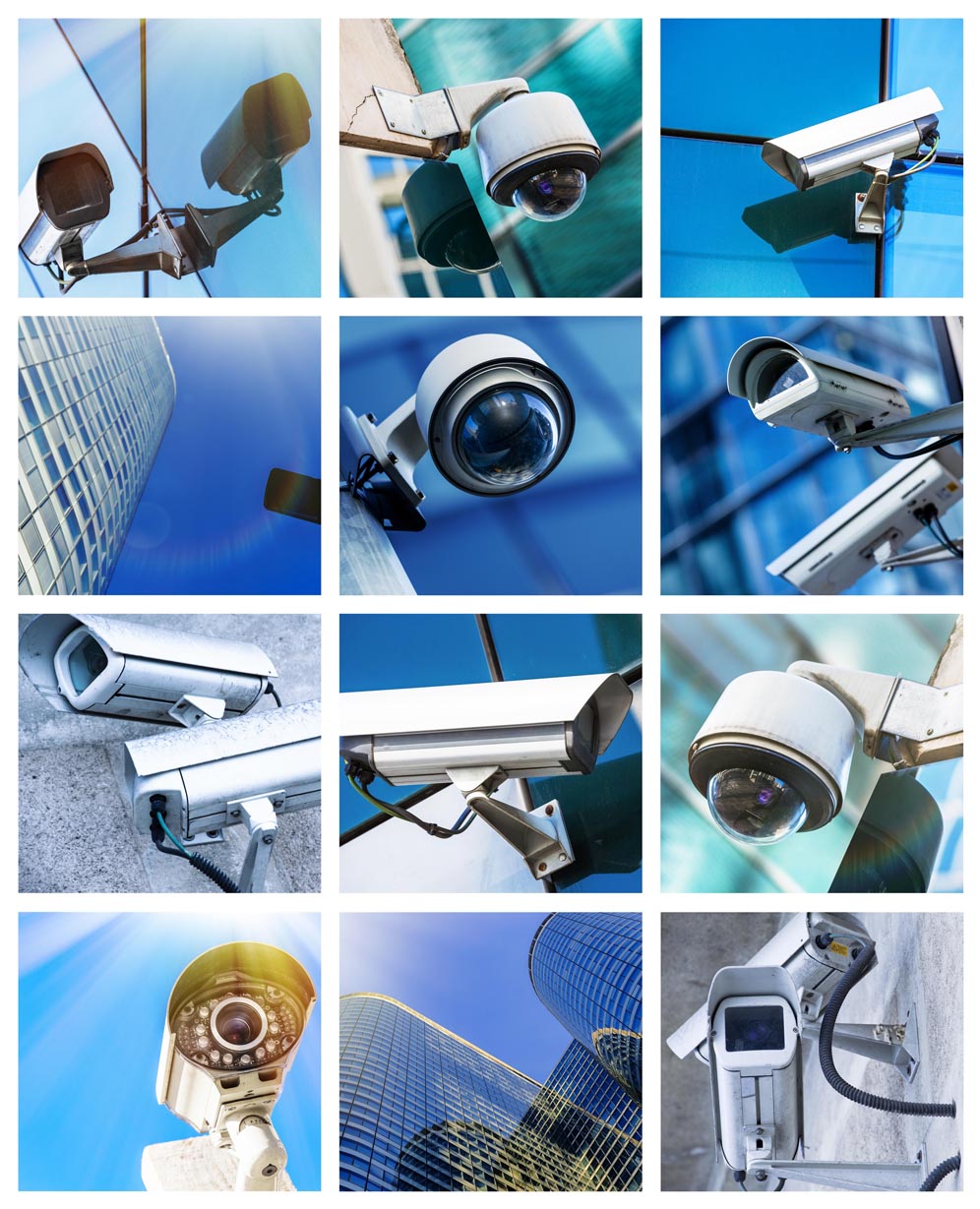
Choosing the wrong camera type is a frequent issue. A camera that looks good on the spec sheet might underperform at night, struggle with glare or backlighting due to limited dynamic range, or fail to handle weather if the IP rating isn’t suitable. Wrong lenses lead to either too narrow a view or uselessly wide images where details get lost.
The discipline that avoids most of this is to start from the operational requirement rather than the product. What does this camera need to let someone do: monitor, detect, recognise, identify? From there work back to the pixel density needed on target, then the lens, then the position. BS EN 62676-4 sets out that method and the pixels-per-metre figures that go with each level.
Configuration is the other half of the job: storage sizing and retention, bandwidth, motion and analytics zones, alerting, user accounts and permissions, time synchronisation, and integration with the systems you already run. Get these wrong and you end up with a great deal of useless footage, missed events, or a system that quietly falls outside your own data protection policy.
Cameras are also network devices, and they are treated as such by anyone attacking your network. Default credentials still in place, firmware that has never been updated, and cameras sitting on the main corporate LAN with no segregation are among the most common findings when we survey an existing self-installed system.
When something does go wrong, water ingress, an intermittent camera, a recorder that has quietly stopped writing, a self-install leaves you doing the diagnosis, and often arguing with a supplier about whether the fault lies with the product or the installation.
What a professional installation actually buys you
When we install a system we hand it over properly: as-built drawings, a camera schedule, cable test results, IP addressing, the VMS configuration as commissioned, and written confirmation that the system meets the operational requirement it was designed against. If anything goes wrong with the installation, or the equipment performs below specification, it is our problem to resolve. That accountability matters most in exactly the organisations where a failure has consequences, and it is worth checking that whoever you use holds NSI or SSAIB certification, since that gives you an independently audited process behind the promise.
None of this depends on us doing every part of the job. Under the hybrid arrangement described above, the client’s cabling still gets tested and recorded before we take it over. The line of accountability simply starts at the point where we take over.
Summary of pros and cons to DIY sourcing and installation of CCTV
Upfront Cost
DIY – Lower. No external labour, though your own staff time is not free
Professional – Higher. Covering design, labour, testing and ongoing support
Cabling quality
DIY – Can be straightforward for competent staff working to an agreed design but risk of wrong specification, over-length runs or poor segregation without one
Professional – Correct spec, tested, properly routed and terminated to BS 6701 and BS EN 50173
Termination & testing
DIY – The most common single source of intermittent faults
Professional – Terminated and tested, with results recorded and handed over
Commissioning
DIY – Camera works, but often left on factory defaults
Professional – Bandwidth, retention, image quality, night settings, motion alarms and analytics set to the operational requirement
Durability
DIY – Water ingress and impact damage are the usual failure modes
Professional – Suitable IP and IK ratings, properly sealed
Compliance
DIY – Yours to assess: coverage, DPIA, signage, retention and access
Professional – Configured and documented to support your policy and the legal duty stays with you as controller
Technical quality
DIY – Depends on your knowledge; risk of mistakes, or poor performance
Professional – Camera, lens and position chosen against a stated operational requirement, so footage is usable as evidence
Liability & support
DIY – Your responsibility if it fails
Professional – Installer accountable, support available
Scalability
DIY – May be the right choice for small/simple additions
Professional – A good choice for complex, critical, multi-site operations
Making the right choice for your situation
For a single small site with straightforward needs and in-house technical capability, DIY can make sense, particularly for simple additions where you can run short, controlled cable runs.
For medium to large organisations, especially those with multiple sites or where security is business-critical, professional installation usually delivers better value. The initial extra cost is often offset by fewer problems, better coverage, proper integration, and footage that holds up when you actually need it.
For most of our clients, though, the answer is neither extreme. Cabling and containment installed in-house to an agreed design, with termination, installation and commissioning done professionally, keeps the labour cost down without putting at risk the parts that are hard and expensive to correct later. Simple internal additions can reasonably be handled entirely in-house. Perimeter, high-security areas, anything at height and anything feeding the front end are worth handing over.

Final thoughts
Installing your own cameras is more realistic than it used to be, and on the right job it saves real money. What decides whether it works is not the mounting. It is the specification of the cable, the quality of the terminations, the choice and positioning of the camera, and what happens at commissioning, the parts that are cheapest to get right at the outset and most expensive to put right afterwards.
More on CCTV
Share on: