Senstar
Senstar
Safeguarding people, places and property
Four decades of perimeter intrusion detection From Ottawa
Senstar have spent over 40 years developing perimeter intrusion detection, and now cover video management and access control from their Ottawa headquarters. Their sensors protect nuclear sites, airports, prisons and borders, supported by three dedicated R&D centres and the largest private outdoor test facility of its kind.
Why does ATEC partner with Senstar?
Sensor Fusion that filters wind, debris and wildlife
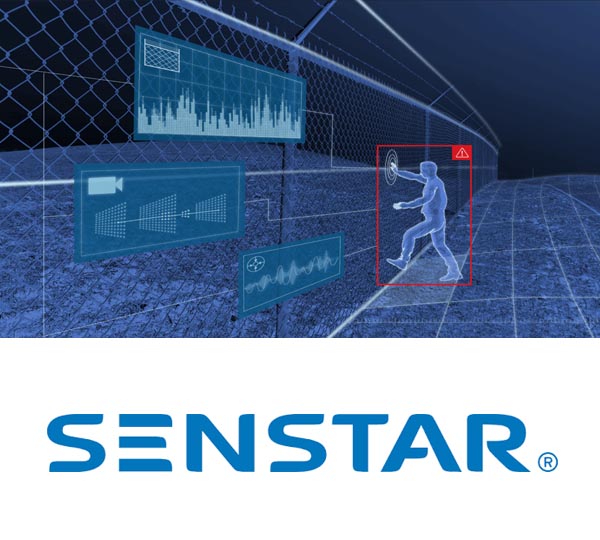
Senstar’s fusion engine assesses low-level signal data from the sensors themselves combined with video analytics, so wind, debris and wildlife are filtered out while the probability of detection is maintained. False alarm rates fall to a level a monitoring team can respond to consistently across a full night shift.
Senstar's strengths
at a glance
- Sensors are configured and calibrated remotely
- Disturbance detected along a fence or buried cable
- Buried detection fields with no visible equipment
- Combined perimeter lighting and intrusion detection
- SDK / API for integration into third-party platforms
- Over 40 years of field deployment
Senstar's strengths in detail
Remote configuration and calibration
Senstar’s software tools configure, calibrate and troubleshoot networked sensors from a single location over TCP/IP. On a live prison, substation or airfield, physically reaching a sensor requires escorts, permits and scheduled access. Remote adjustment allows a perimeter to be retuned as vegetation, weather and site conditions change.
FiberPatrol measurse minute changes in disturbance
FiberPatrol runs fibre-optic cable along a fence line or buried perimeter and detects disturbance by measuring minute changes in the light passing through it. The system reports the location of the disturbance along the cable as well as the fact of the event. Long perimeters require no field electronics and no zone hardware at intervals.
OmniTrax creates an invisible electromagnetic detection field
OmniTrax buries a ported coaxial cable underground, creating an invisible electromagnetic detection field that follows the line of the perimeter. There is no visible equipment above ground and nothing for an intruder to identify or climb. Sites where overt security measures are unsuitable, including diplomatic buildings and private estates, receive full perimeter detection.
Combined lighting and detection
The LM100 combines Dark-Sky approved LED lighting with accelerometer-based intrusion detection in a single fence-mounted unit. One product, one mounting position and one cable run cover both functions, and the lighting itself acts as a deterrent. Installation labour across a long perimeter is materially lower than specifying and wiring two separate systems.
Integration into existing platforms
Senstar publish a mature, field-proven SDK and API, and their Network Manager conveys alarm and status data to third-party platforms as readily as to Symphony. A customer standardised on another head-end system can bring Senstar perimeter detection into that platform directly.
Four decades of field deployment
Over 40 years of installations at nuclear plants, prisons, airports and borders, supported by three R&D centres and an extensive private outdoor test facility. Perimeter detection is judged on both missed intrusions and nightly false alarms. That length of field deployment provides a substantial body of performance evidence across widely differing climates and site types.